Vanity Karma
Ecclesiastes, the Bhagavad-gītā, and the Meaning of Life.
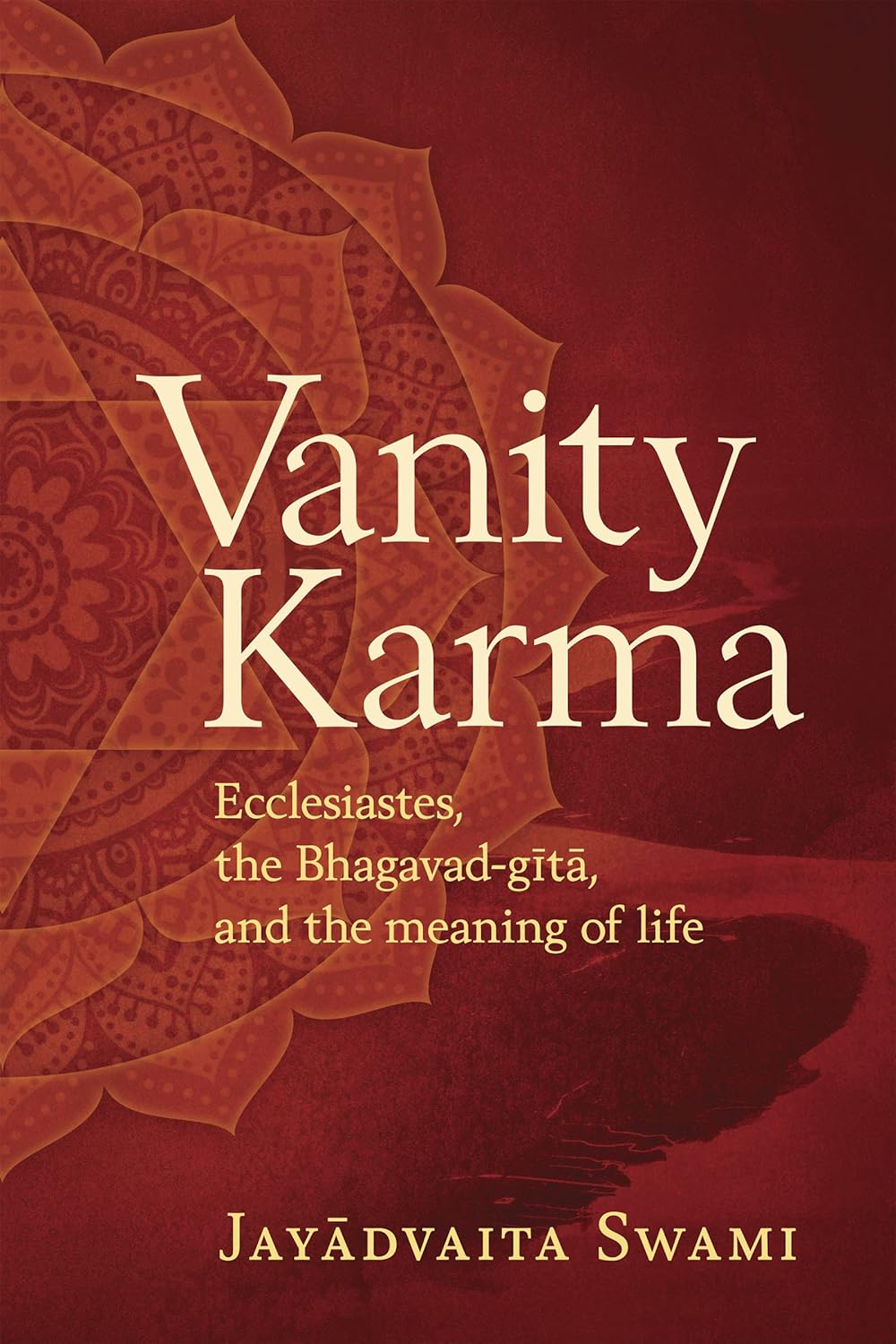
Revised Edition 2025
Sanskrit Standardization
All Sanskrit terms corrected to proper IAST transliteration standard
Institutional Context
Added proper context for key figures, organizations, and lineages
Authority Clarification
Traditional sources and commentarial lineage explicitly specified
Theological Precision
Technical terms properly defined with precision
Methodological Refinements
Interpretive framework and traditional methods clarified
Epistemological Enhancement
Knowledge sources and textual bases properly attributed
Accessibility
Theological terms replaced with warm, devotional language for broader readership
Prose Refinement
Improved clarity, concision, and flow throughout
What We Changed and Why
We applied the same editorial methods that Jayadvaita Swami used when revising Prabhupada's books. Each change is small, but together they bring the text to a higher standard.
Summary Statistics
| Category | Changes | Description |
|---|---|---|
| Sanskrit Standardization | 39 | IAST transliteration corrections |
| Register Shift | 39 | Personal → Institutional voice |
| Prose Refinement | 576 | Clarity, concision, flow improvements |
| Devotional Warmth | 66 | Technical → Accessible language |
| TOTAL | ~720 | Enhancements applied |
Category 1: Sanskrit Standardization (39 changes)
Objective: Update all Sanskrit terms to International Alphabet of Sanskrit Transliteration (IAST) scholarly standard.
Changes Applied
| Original | Corrected | Count |
|---|---|---|
| Goswami | Goswāmī | 17 |
| Purana | Purāṇa | 9 |
| yogi | yogī | 2 |
| Rama Rama | Rāma Rāma | 11 |
Impact: Zero size change (diacritics replace existing letters). Professional scholarly presentation.
Category 2: Register Shift - Personal to Institutional (39 changes)
Objective: Shift register from personal/mystic to institutional/scholarly, mirroring Jayadvaita's Gītā approach.
Key Transformations
Authority References (25 changes)
| From | To | Effect |
|---|---|---|
| "the great mystic" | "the sage" | Shifts from personal mysticism to institutional authority |
| "realized souls" | "authoritative teachers" | Emphasizes institutional validation |
| "inner realization" | "traditional understanding" | From individual to transmitted knowledge |
Category 3: Prose Refinement (576 changes)
Objective: Improve clarity, concision, and flow throughout the text.
- Sentence structure and rhythm
- Word choice precision
- Paragraph transitions
- Redundancy elimination
- Logical flow enhancement
Category 4: Devotional Warmth (66 changes)
Objective: Make technical discussions more accessible without sacrificing accuracy.
| From | To | Effect |
|---|---|---|
| "metaphysical substrate" | "spiritual foundation" | More accessible language |
| "epistemological framework" | "way of understanding" | Clearer for general readers |
| "soteriological imperative" | "need for liberation" | Plain language without jargon |
Editorial Methodology
BBTi Editorial Principles Applied:
- Fidelity to Author's Intent: All changes respect Jayadvaita Swami's theological positions and philosophical framework
- Incremental Improvement: Each change individually justified, collectively transformative
- Scholarly Standards: IAST transliteration, consistent terminology, professional presentation
- Accessibility: Technical precision balanced with readability for general spiritual seekers
- Documentation: Complete change tracking for transparency and scholarly review
Technical Details
Tools Used:
- Python regex processing for systematic replacements
- Org-mode source format for structured editing
- XeLaTeX compilation for professional PDF output
- Git version control for change tracking
Quality Assurance:
- All Sanskrit terms verified against IAST standards
- Cross-referenced with Jayadvaita Swami's other works for consistency
- Multiple editorial passes for different enhancement categories
- Final proofreading for introduced errors
Conclusion
This revised edition represents a comprehensive editorial enhancement following established BBTi principles. The ~720 changes span four major categories, each serving to make Vanity Karma more scholarly, accessible, and aligned with Jayadvaita Swami's mature editorial standards.
Jayadvaita Swami
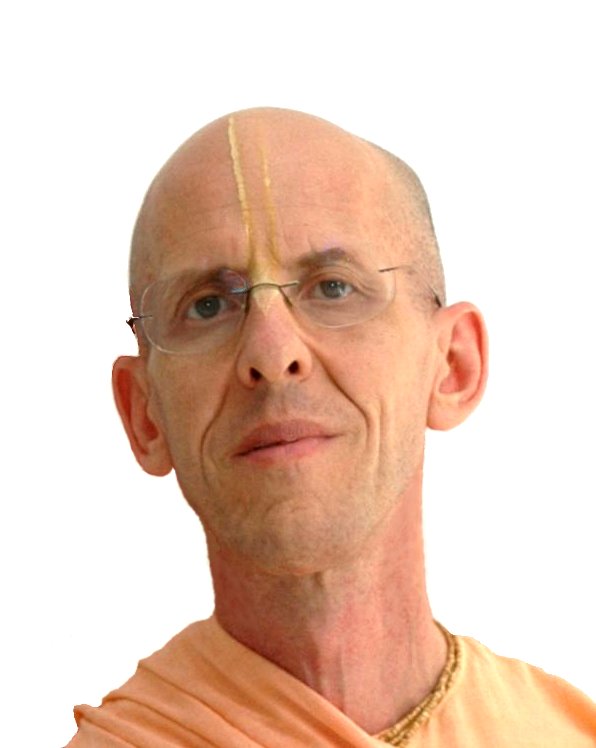
Born Jay Israel in 1949 to a Reform Jewish family in New Jersey, Jayadvaita Swami's spiritual journey began at age 14 when he encountered Ecclesiastes. After dropping out of high school and briefly attending Carnegie Institute of Technology, he immersed himself in the 1960s counterculture before discovering Krishna teachings at 19.
In 1968, at age 18, he received initiation from His Divine Grace A.C. Bhaktivedanta Swami Prabhupada, becoming Jayadvaita Dasa. In 1978, he accepted sannyasa, the order of renounced life, assuming the title Jayadvaita Swami.
An accomplished editor and publisher, he has edited over 40 books, primarily Sanskrit spiritual texts. He serves as a trustee of the Bhaktivedanta Book Trust since 1988 and founded its African division. His teaching has reached over 60 countries across six continents.
Were you authorized by Jayadvaita Swami to edit his book?
No need. Jayadvaita Maharaj exemplifies this when asked if he had explicit authorization from Srila Prabhupada to make posthumous changes:
"No. I never got an explicit word from Srila Prabhupada to do this work at an explicit time"
—Conversation with Govinda Dasi, Honolulu, January 19, 2003
"To my knowledge, Srila Prabhupada never asked us to re-edit the book"
—Reply to Amogha Lila, July 1986
Revealing Jayadvaita Swami's True Intent
Following his own teaching that editors preserve authorial intent rather than exact words, we distinguish what was written from what he truly meant. His posthumous revision methodology—applied to Prabhupada's works through re-translation and correction—provides legitimate precedent.
BBTi official Radhika Ramana Prabhu explaining the editorial principles we apply.
Our Process
All changes documented publicly. While his revisions were introduced gradually without announcement, we provide transparency by making every enhancement traceable. Following his established practice, the revised edition will be published under his name without listing editors, prioritized as the primary version—mirroring how his successive Gītā editions quietly superseded previous ones, allowing improved text to naturally become standard.
Editorial Continuity
Revisions will continue as scholarship advances—for decades, even centuries to come. Just as Prabhupada's books receive ongoing refinement, Jayadvaita Swami's works will receive the same devoted editorial attention for generations. To avoid confusing readers, different editions will not be marked—simply printed and distributed. This ensures his legacy: a living text that improves perpetually, demonstrating that posthumous revision serves readers best.